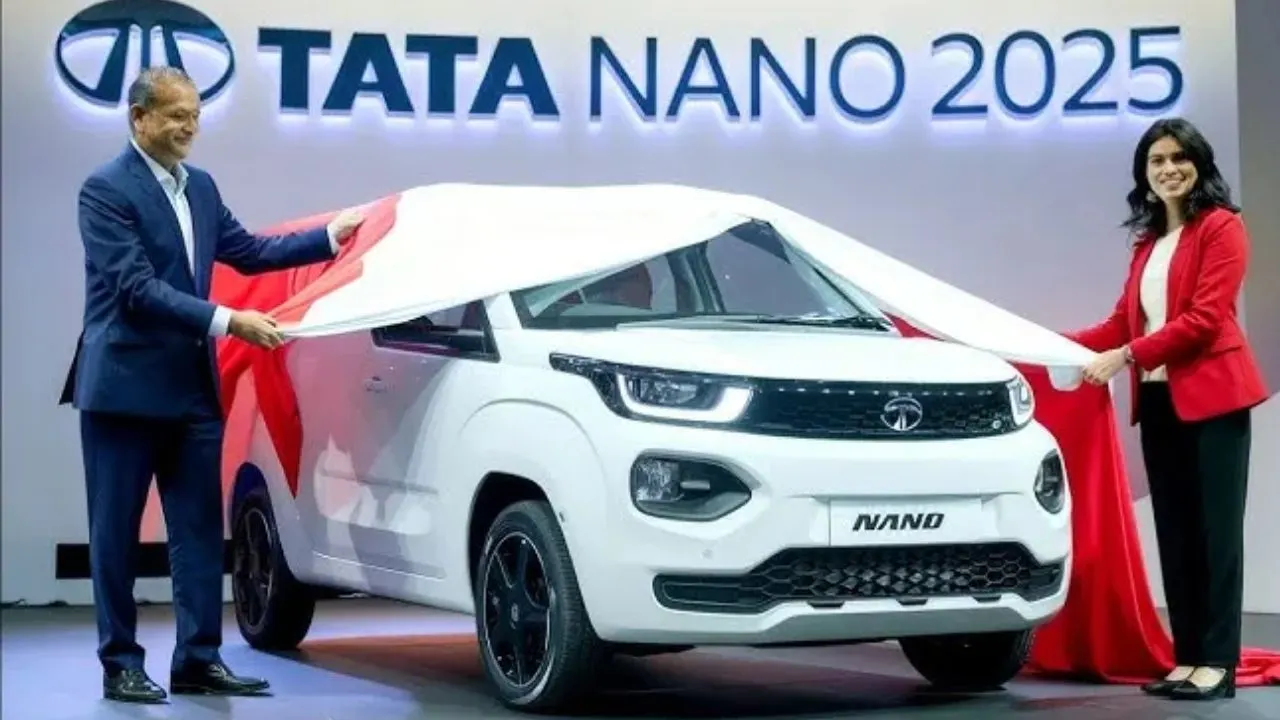
The revival of the iconic Tata Nano small car in 2025 could bring affordable mobility back into the reach of many. The original Nano grabbed headlines with its tiny dimensions and dirt-cheap price, which enabled many first-time car buyers to consider owning a vehicle.
Now the claim is that it comes with 3.6 L engine (or some power pack equivalent), fuel efficiency of about 35 km per litre and a cost of just ₹2.25 lakh. If this turns out to be true, then it will be a strong statement in India: a vehicle that is ultra cheap and fuel efficient but usable on a daily basis in the cities and small towns around the country.
Nano 2025 to check all the right boxes in a country where many households care more about the operating cost, the fuel efficiency and the ease of driving. It has been tailored specifically for the needs of the cost-conscious car buyer, the city dweller who commutes on a daily basis and the budget minded first-time car owner who is after a bit of practical motoring without the financial commitment.
At a price of ₹2. 25 lakh (ex-showroom probably), Tata Nano is all set to become a household name yet again small in size yet big on value.
What’s New and Important Today
The largest figures concerning the engine size and the mileage are what matter most for the 2025 model of the Nano. A 3.6 L engine (either 3.6 litre displacement or some modern equivalent term, although previous Nanos were known for their tiny displacement) indicates that Tata has decided to raise performance and refinement from prior models.
This larger engine (yet to be confirmed) should mean a smoother acceleration, and a better ability to handle long stretches on highway and provide a little more confidence in everyday driving. Along with a claimed mileage of 35 km per litre, the car holds a promise of lesser fuel bills for a large number of Indian buyers.
In a class where every rupee counts towards your running costs, this blend of performance and economy is rather appealing. Apart from that, with a low price of ₹2.25 lakh, the Nano yet again qualifies as one of the cheapest new cars in India, making the entry barrier to four-wheeler ownership even lesser.
Design & Urban Friendliness
Compactness has been one of the Nano’s strongest selling points, and the 2025 model keeps that DNA. On packed city roads and in crammed parking lots in India, a smaller size allows for easier manoeuvring, parking is more straightforward and the driver has less stress. The 2025 Nano is expected to come with a new coat of paint modern design elements, better interior quality and more ergonics, yet retaining its small-city utility.
Ride comfort, ease of getting in and out, clear visibility and sensible storage are also considerations for city riders. Since the car is priced reasonably, even families that need a second car for short trips or city driving will be tempted to buy.
Costs of Ownership and Practical Benefits
Among the biggest attractions of the Nano has always been the running costs. In view of the claimed mileage of 35 km per litre the owners would be able to save a lot on petrol when compared to larger hatchbacks of sedans. Maintenance costs are also expected to be minimal given the simple design and smaller size. To many middle-class consumers, especially those living in small towns or tier-2/3 cities, possessing a four-wheeler for a price tag of around ₹2.25 lakh is a huge achievement.
Cheaper insurance, smaller tyres, fewer parts to swap out, and better fuel econ all make owning a little more wallet-friendly. Also for families that once depended on motorcycles or scooters for day-to-day mobility, this might be a substantial move up to a car without breaking the bank.
Target Buyers & Impact on Market
The 2025 Nano is definitely targeted towards first-time buyers, young families, budget users and urban commuters who travel mostly within city limits or on short-highway hops. For them, the car will offer basic comfort of four wheels versus two, a dependable mobility option and a sense of personal ownership, all for a minuscule amount of money.
If the price and km claims are real and catches the publics attention, as the commodores did in the mid to late 90s, it could shake up the entry level car sector in India. They’ll need to respond by pricing or featuring products to compete. It also means that mobility is more democratized: those who used to “have no business” owning a car, those in rural areas or lower income strata, might now have an option.
Challenges & Matters to Consider

To be sure, ballsy statements need to be tempered with grounded experience. A 3.6 L engine may cause some to wonder about the mileage it’ll get in the real world, especially in stop-and-go traffic in the city.
Service network, availability of spares and overall build quality will play a big role target buyers are price sensitive, any surprise on maintenance front can dent the value proposition. Safety features will also be key: even if the price is low, buyers will want at least reasonable levels of protection, reliability and durability.
In addition, development of infrastructure such as car dealers in smaller towns and the availability of units for showrooms and test drives will contribute to the spreading popularity of the model. In the end, even though the bargain price is an enticing prospect, one cannot truly skim too many features and comforts there’s always the buyer comparing against slightly pricier offerings that potentially have more.
Why This Matters for Indian Mobility
The Indian car market is special it’s full of first-time buyers, who care a great deal about price and running cost, and who face huge mobility challenges in its cities. The return of the Nano in 2025 at such a low price and claiming high efficiency is a symbolic message.
that affordable, four-wheeled mobility can be accessible, efficient, and modern. For most families, owning a car means greater flexibility, safety and comfort and if that can be done for somewhere near Rs 2.25 lakh, it could really change things. It would also help Tata in strengthening its presence in the entry‐level segment and should help revive the interest in small cars, which was shifting more towards the bigger vehicles earlier.
Conclusion
To summarize the 2025 Tata Nano aims to be a smart, thrifty, fuel-efficient city car for the value-focused buyers in India. It runs on 3.6 L engine with mileage of 35 km per litre and the ex-showroom price is ₹2.25 lakh.
It is obvious that real-world ownership will tell if this numbers make the cut but on-paper, this could be the comeback of one of India’s most beloved small cars with a modern twist, and aimed right at those who want to get into a car but are wary of spending a fortune. If you are someone who values practicality and low-cost mobility in today’s street or semi-urban India, the Nano 2025 might just be worth a peek.